

Heating & Air Conditioning Services
in San Gabriel Valley & Los Angeles Since 1976!
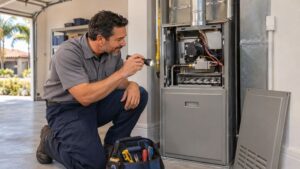
A furnace tune-up typically includes inspecting key components, cleaning serviceable parts, checking controls, and testing heating operation. The goal is to evaluate how the furnace is working and identify conditions that need attention before they cause a loss of heat.
For San Gabriel Valley homeowners, the appointment is also a chance to discuss uneven temperatures, unusual sounds, or changes in heating performance. Here is what a professional tune-up generally involves and what to ask when scheduling service.
A furnace tune-up is preventive maintenance. It focuses on the condition and operation of your heating equipment, even when the furnace appears to be working.
The exact checklist depends on the furnace model, manufacturer instructions, accessibility, and the service package. Gas, electric, and condensing furnaces have different components, so every appointment should be appropriate for the equipment being serviced.
The technician checks that the thermostat calls for heat and that the furnace responds appropriately. Observing startup, operation, and shutdown helps reveal control or cycling problems.
The filter is inspected for dirt, fit, and condition. A restricted filter can interfere with airflow. Replacement or cleaning depends on the filter type and the appointment’s scope.
Blower components and accessible airflow conditions may also be evaluated. Tell the technician if certain rooms receive little warm air or if airflow has changed.
On a gas furnace, the burner assembly, ignition system, and flame-sensing components are checked. Cleaning is performed where needed and appropriate under the manufacturer’s procedures.
A furnace that repeatedly tries to start or shuts off soon after ignition may need diagnosis beyond routine maintenance.
The technician inspects accessible heat exchanger surfaces and venting components for signs of deterioration, damage, or other concerns. The inspection method depends on the equipment and access.
If findings suggest a problem that needs further investigation, additional testing may be recommended. A routine visual inspection should not be treated as a guarantee that every hidden surface has been examined.
Gas furnace maintenance commonly includes checking fuel connections, gas pressure, and burner combustion. Ask whether combustion analysis and carbon monoxide testing are included in the appointment.
Electrical connections, motor operation, and applicable safety controls are checked according to the equipment’s requirements. These checks help identify loose connections, abnormal operation, or components needing further attention.
High-efficiency condensing furnaces produce condensate during heating. Their drainage components need attention as part of model-appropriate maintenance. Other furnace designs have different requirements.
The technician runs the furnace and evaluates its performance. This may include measuring the temperature difference between return and supply air and comparing it with the manufacturer’s specified range.
Do not assume that every corrective service is included. A maintenance visit may uncover a failed part, a drainage problem, or a need for more extensive cleaning. Ask for an explanation and price before approving additional work.
Whole-home duct cleaning, duct leakage testing, and major blower cleaning may be separate services. When booking, explain what you want addressed so the appointment is scheduled appropriately.
If the furnace is already failing to heat, describe the symptoms when requesting furnace repair. An existing malfunction may require a diagnostic visit rather than a routine tune-up.
Annual professional maintenance is a common recommendation, ideally before the main heating season. Follow the furnace manufacturer’s instructions and any applicable maintenance requirements.
For homeowners in Temple City, Pasadena, Arcadia, and surrounding San Gabriel Valley communities, fall is a practical time to plan the appointment. If you missed that window, you can still arrange service during the heating season.
Small details can help explain an intermittent problem. Before the visit, make a short list of what you have noticed:
Clear a path to the furnace and thermostat. If the equipment is in an attic, closet, or garage, mention access limitations when scheduling.
Ask for a summary of what was inspected, cleaned, and tested. Any concerns should be explained in plain language, along with recommended next steps and whether additional diagnosis is needed.
Keep the service record with your equipment information. It gives you a useful reference for future appointments and helps you track recurring issues.
Connor Air Conditioning & Heating is a family-owned company serving the San Gabriel Valley since 1976. Our team can help you arrange maintenance and discuss concerns about your heating system.
Learn about our preventive HVAC maintenance services, or call (626) 286-3157 to schedule an appointment.
A tune-up generally includes inspection and operational checks as well as appropriate cleaning. Ask which cleaning tasks are included, because more extensive work may be quoted separately.
No. Filter care supports airflow, but it does not evaluate ignition components, combustion, electrical connections, venting, or safety controls.
No. Maintenance can identify developing concerns and address service-related issues, but components can still fail between appointments.
Tell the company about the malfunction when booking. The system may need a repair diagnosis before routine maintenance can be completed.