

Heating & Air Conditioning Services
in San Gabriel Valley & Los Angeles Since 1976!
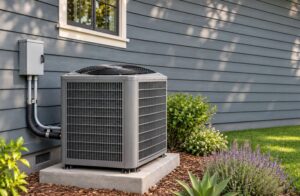
Yes—a properly designed heat pump system can replace both a furnace and an air conditioner. It provides heating in cooler weather and cooling when temperatures rise, handling both jobs with one coordinated system.
For San Gabriel Valley homeowners planning an HVAC replacement, the bigger question is what that change involves. Can your existing ducts stay? What replaces the furnace indoors? Will electrical work be necessary? Understanding the complete project helps you compare your options before choosing equipment.
An air-source heat pump moves heat using refrigerant. During summer, it transfers heat from inside your home to the outdoors. During winter, it reverses operation and brings heat from outdoor air into your home.
That means the outdoor unit serves both seasons. However, “one system” does not mean one piece of equipment. A typical central split heat pump also needs compatible indoor equipment, controls, refrigerant lines, and ductwork.
In many all-electric central heat pump installations, an air handler takes the place of the furnace. The air handler contains a blower and indoor coil to distribute heated or cooled air through the house.
Your existing furnace may currently provide the blower used during air conditioning season. Removing it means the new design must provide that airflow function, along with heating and cooling. This is why replacing only the outdoor air conditioner is not automatically a complete conversion.
Ask your contractor to identify the indoor and outdoor components in the proposal and explain how they work together.
Possibly. A ducted heat pump can use existing ducts when their size, condition, and configuration are suitable. The evaluation should address supply and return airflow, leakage, insulation, and rooms with persistent comfort problems.
Ask whether the proposal includes duct repairs or modifications. If one bedroom has always been uncomfortable, bring that up during the assessment so the replacement plan addresses the problem.
For homes without suitable ducts, a ductless heat pump may offer another approach. Whole-home coverage requires a design that accounts for room layout and how air reaches separate spaces.
Before selecting equipment, request a clear assessment of the following:
A Manual J load calculation helps establish heating and cooling needs. The old system’s size is useful background information, but it should not be the only basis for selecting replacement capacity.
Not always. An all-electric heat pump system can be designed to provide the home’s heating, with any supplemental heat needs evaluated as part of the design. Equipment performance must be checked against the heating load at the outdoor temperatures used for local design conditions.
Another option is a dual-fuel system, which pairs a compatible heat pump with a gas furnace. That arrangement retains gas heating rather than replacing it completely. Ask why either approach is being recommended for your home.
Consider requesting a complete-system proposal if both your furnace and air conditioner are aging, repairs are becoming frequent, or you are planning a renovation that affects heating and cooling.
If only one component needs replacement, ask for alternatives. Compare what happens to the remaining equipment, its compatibility, and the likely scope of a future replacement. A detailed proposal makes those choices easier to understand.
Connor Air’s heat pump installation services can help you explore a system designed around your home.
Do not assume that it will. Heat pumps use electricity efficiently, but your bill also depends on utility rates, equipment selection, weather, thermostat settings, and the home’s condition.
When reviewing estimates, ask for projected heating and cooling costs and the assumptions behind them. Also compare the total installed price, including any electrical or ductwork changes. A lower equipment price alone does not establish the lower overall project cost.
For homeowners in Temple City, Pasadena, Arcadia, and surrounding San Gabriel Valley communities, the starting point is an evaluation of the existing system and the home’s comfort needs.
Connor Air Conditioning & Heating is a family-owned company serving the area since 1976. We can help you understand your replacement options and the work involved in changing to a heat pump.
Call (626) 286-3157 to discuss replacing your furnace and air conditioning system.
It may be possible, but the indoor equipment and controls must be compatible. Ask whether the proposal creates an all-electric system or keeps the furnace as part of a dual-fuel setup.
Not necessarily. Other appliances may still use natural gas. Removing gas space heating and discontinuing gas service are separate decisions.
No. The answer depends on the existing electrical system and the requirements of the proposed equipment. Have those requirements evaluated before finalizing the project.
Yes, when the system is appropriately designed and installed for whole-home cooling. Equipment capacity and air distribution both matter.