

Heating & Air Conditioning Services
in San Gabriel Valley & Los Angeles Since 1976!
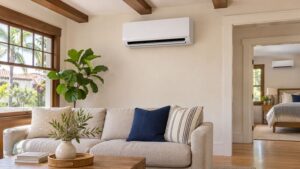
Yes—a properly designed mini split heat pump system can heat and cool an entire home. Mini splits are often associated with a single bedroom, home office, or addition, but they can also provide whole-home comfort when the equipment and air distribution are planned for every space.
The key is the design. One indoor unit in the living room should not automatically be expected to keep every bedroom comfortable. For San Gabriel Valley homeowners considering ductless heating and air conditioning, here is what to understand before replacing an existing system.
A mini split heat pump connects an outdoor unit to one or more indoor units through refrigerant lines. In cooling mode, it moves heat out of the home. In heating mode, it transfers heat from outdoor air indoors.
Choose a heat pump model if you want both functions. Some ductless equipment provides cooling only, so confirm that the proposed system includes heating.
Ductless indoor units deliver conditioned air directly into the spaces they serve. This makes them an option for homes where installing a full network of ducts would be difficult.
A single-zone system pairs one outdoor unit with one indoor unit. It can be a good fit for a specific room or an open area. Whether it can serve a very small home depends on the layout and calculated heating and cooling needs.
A multi-zone system connects several compatible indoor units to one outdoor unit. Those indoor units serve separate rooms or areas, allowing different temperature settings by zone.
A whole-home proposal may use a multi-zone system, several single-zone systems, or a combination of compatible ducted and ductless equipment. Ask why the proposed arrangement suits your floor plan.
Not necessarily, but every room that needs heating and cooling must have an effective way to receive it. An open living and dining area may be served together. Enclosed bedrooms and rooms around corners need closer attention.
For example, a unit in a hallway may keep that hallway comfortable while a bedroom behind a closed door remains too warm or cold. During the consultation, explain which doors normally stay closed and how you use each room.
Ask the contractor to show which indoor unit or duct outlet will serve each space. A room-by-room plan is more useful than a promise that one large unit will cover the house.
Equipment capacity should reflect heating and cooling loads, rather than square footage alone. Window area, sun exposure, insulation, ceiling height, and the conditions around each room affect those loads.
The outdoor unit must support the proposed system, and each indoor unit must suit its assigned zone. Oversized equipment can cycle inefficiently, while undersized equipment may struggle to maintain comfortable temperatures.
Request a professional load calculation and an explanation of how the selected indoor and outdoor equipment matches those results.
Wall-mounted units are familiar, but they are not the only option. Depending on the equipment and available space, a design may include ceiling cassettes, floor-mounted units, or concealed ducted units.
A concealed unit can serve selected rooms through short duct runs. This may suit homeowners who want fewer visible indoor units. Installation access and equipment compatibility determine which combinations are practical.
Before approving the project, ask for a clear explanation of:
Also clarify whether your existing furnace or air conditioner will be removed, retained, or used to serve areas outside the mini split project. An addition-only installation and a complete replacement have different scopes.
If you own a home in Temple City, Pasadena, Arcadia, or a surrounding community, bring your layout and appearance concerns into the planning conversation. Tell the contractor about additions, rooms with uneven temperatures, and areas where you want to limit visible equipment.
Ask to review proposed unit locations and exterior piping routes before work begins. Photos of completed installations can also help you understand the finished appearance.
Ductless systems avoid losses associated with leaky distribution ducts, and zoning can help you manage comfort by area. However, savings depend on the system being replaced, equipment efficiency, utility rates, settings, and installation quality.
Compare the complete installed cost and estimated operating costs. More indoor units and more complicated installation routes can change the project price. Ask what assumptions support any savings estimate.
Connor Air Conditioning & Heating has served the San Gabriel Valley since 1976. Our team can evaluate your home and help you compare a whole-home system with options for individual rooms.
Learn about our mini split installation services, or call (626) 286-3157 to discuss your heating and air conditioning needs.
One outdoor unit may support several indoor units, depending on the model and design. One indoor unit should not be assumed to serve three enclosed bedrooms. Each room needs an appropriate air distribution plan.
Yes. A mini split can serve a specific room while the central system continues serving the rest of the home. The proposal should explain the role of each system.
Possibly, but expansion depends on the outdoor unit’s capacity, available connections, approved equipment combinations, and installation requirements. Discuss future rooms before choosing the initial system.
No. Compare it with a ducted heat pump or a combination of ducted and ductless equipment. The right choice depends on your home’s layout, existing ducts, budget, and comfort preferences.